International commerce in the ancient world
1 satamana from Gandhara Janapada, circa 5th century BC (NCC2014.39.1)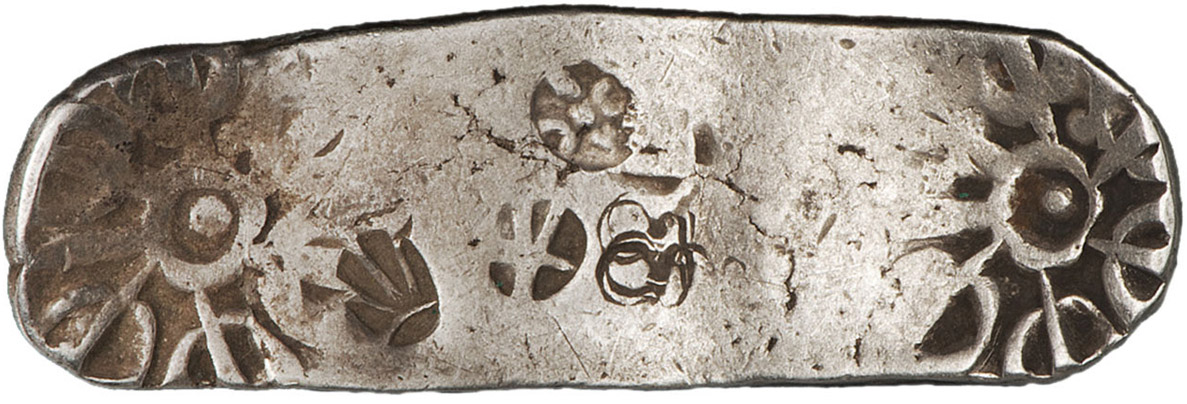
The recent additions to the National Currency Collection described below are from very different parts of the world and are between 1500 and 2500 years old. It may not be obvious at first, but they reflect themes that are still important to us today. Globalization isn’t a recent development–international trade has been around since ancient times. And even then, people were worried about counterfeiting!
Punch-marked coins, Gandhara Janapada, circa 5th century BC
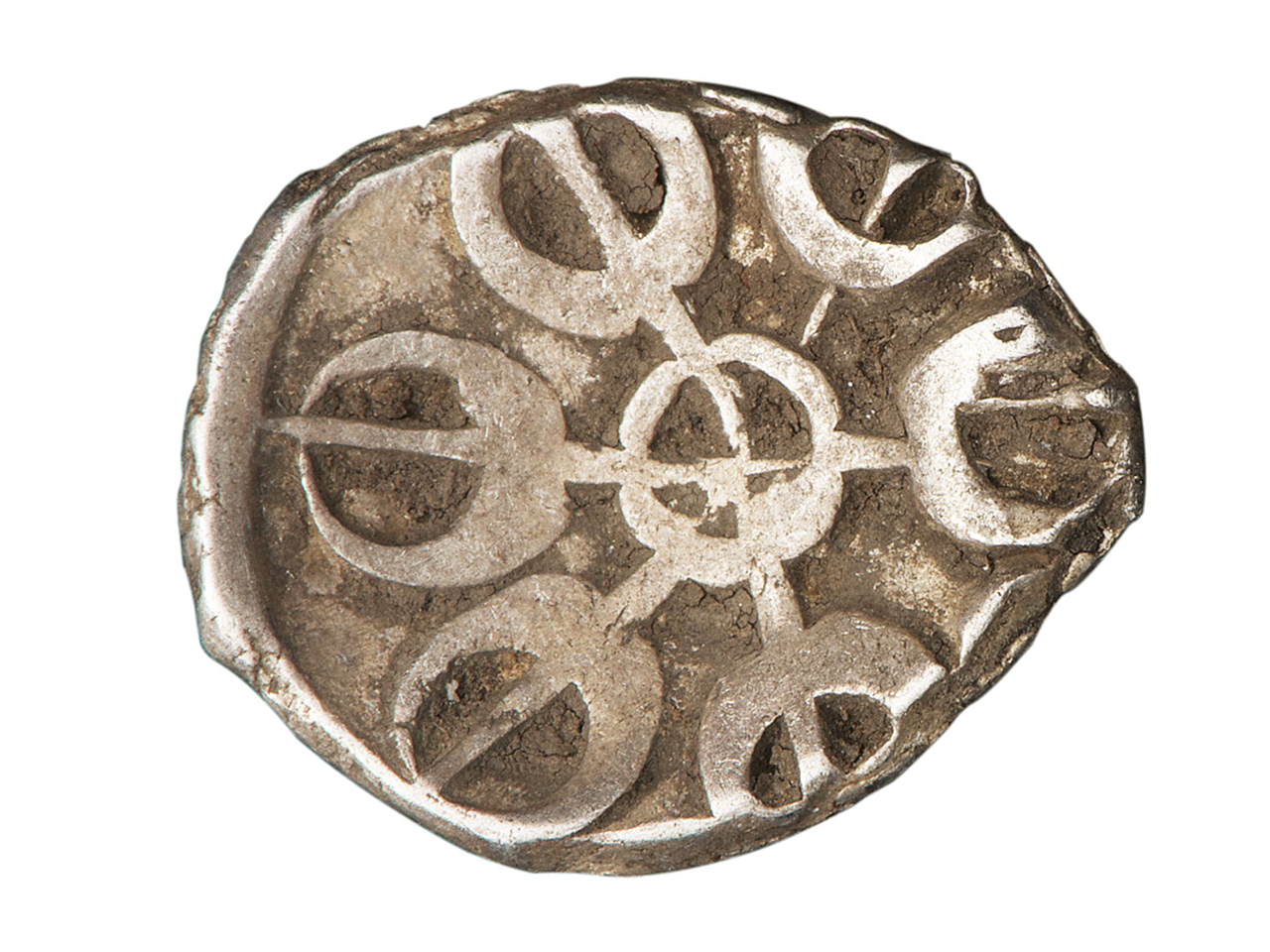
1 shana or 1/8 satamana from Gandhara Janapada, circa 5th century BC (NCC2014.39.3)
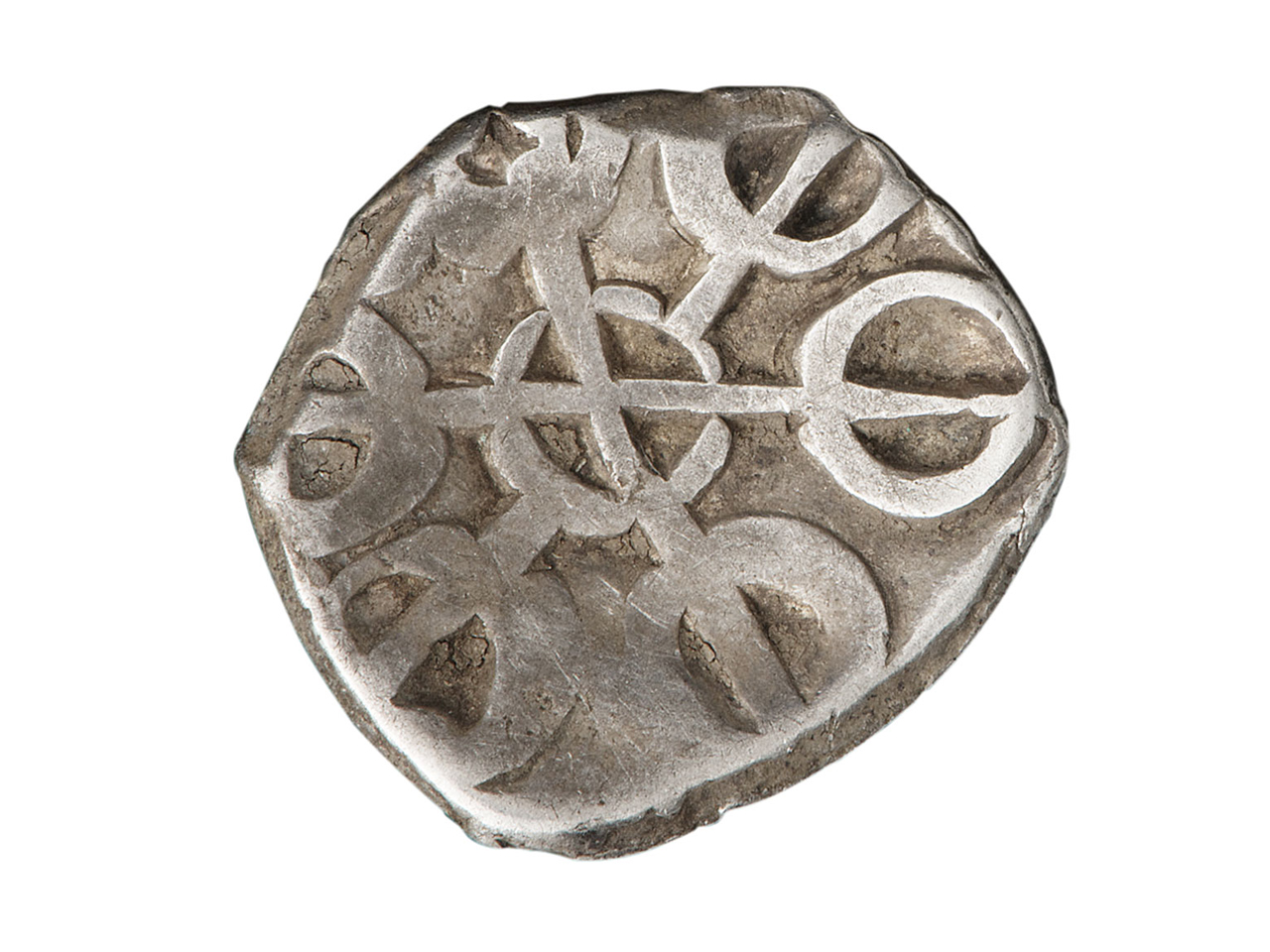
1 shana or 1/8 satamana from Gandhara Janapada, circa 5th century BC (NCC2014.39.3)
1/4 shana from Gandhara Janapada, circa 5th century BC (NCC2014.39.4)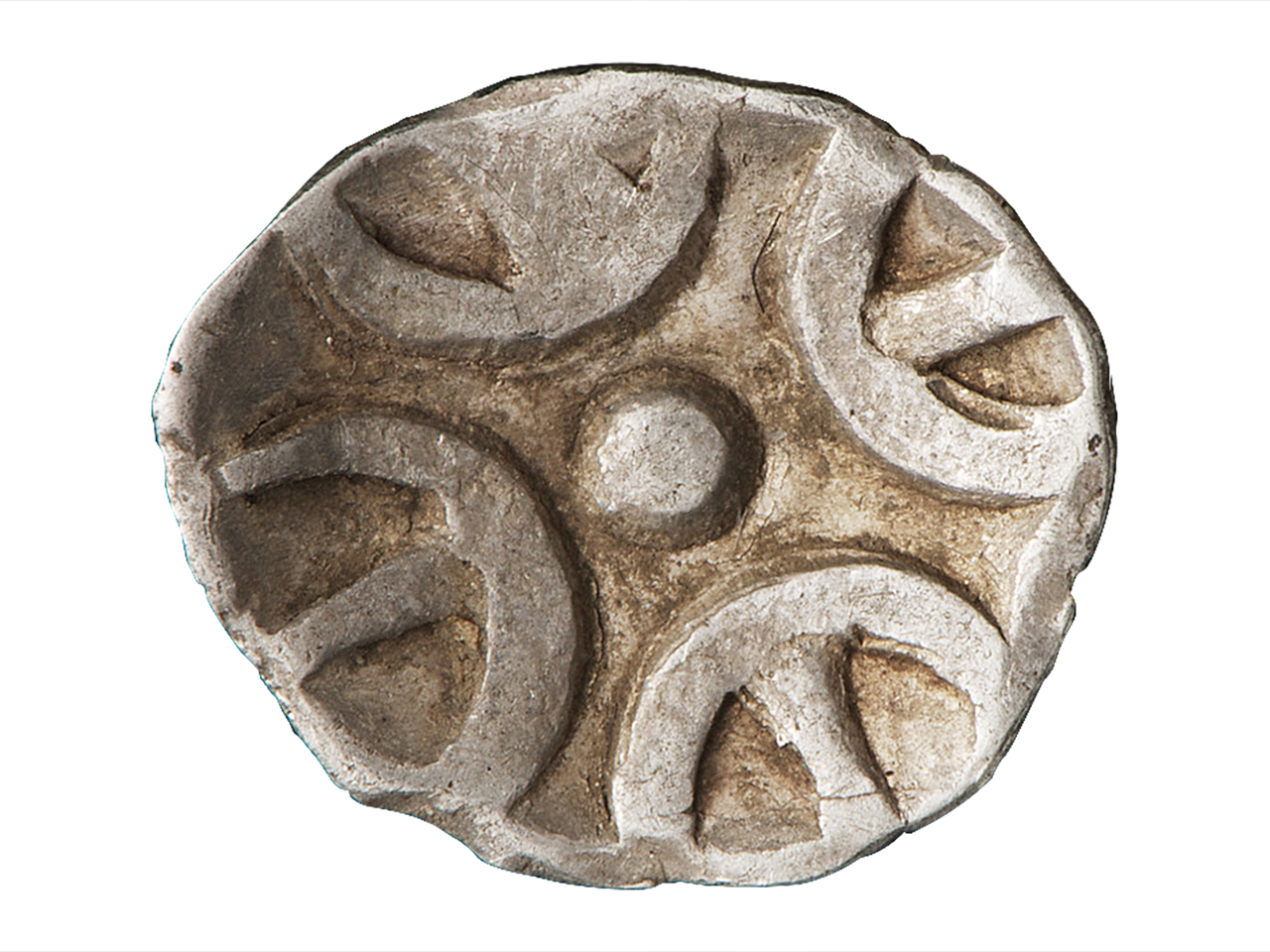
Many of us know about Afghanistan only from news reports. However, the country has a long and sometimes surprising history. In the first millennium BC, the region of northern Afghanistan and Pakistan was home to the Indian Janapada (kingdom) of Gandhara. At the crossroads of Asia and the Middle East, Gandhara was perfectly situated as a hub for trade and the export of cultures. We know that Gandhari merchants traded with Babylon and may have travelled as far west as Egypt and Ancient Greece.
These silver coins attest to the kingdom’s trade connections and wealth. The weight of the coins is based on an Indian standard, the satamana, that is also related to the Babylonian shekel. The smaller stamps on the bar-coin are banker or merchant marks. These marks were probably made by someone testing the quality of the silver.
Glass coin weights, Byzantine Empire, circa 6th-7th century AD
Although the Roman Empire in Western Europe was overrun by invaders, it survived in the East as the Byzantine Empire for over a thousand years. The eparchs, or governors, of cities such as Constantinople (now Istanbul in Turkey) were almost as important as the emperor himself. One of the eparchs’ responsibilities was to issue the official weights that merchants used to test coins–an early anti-counterfeiting measure.
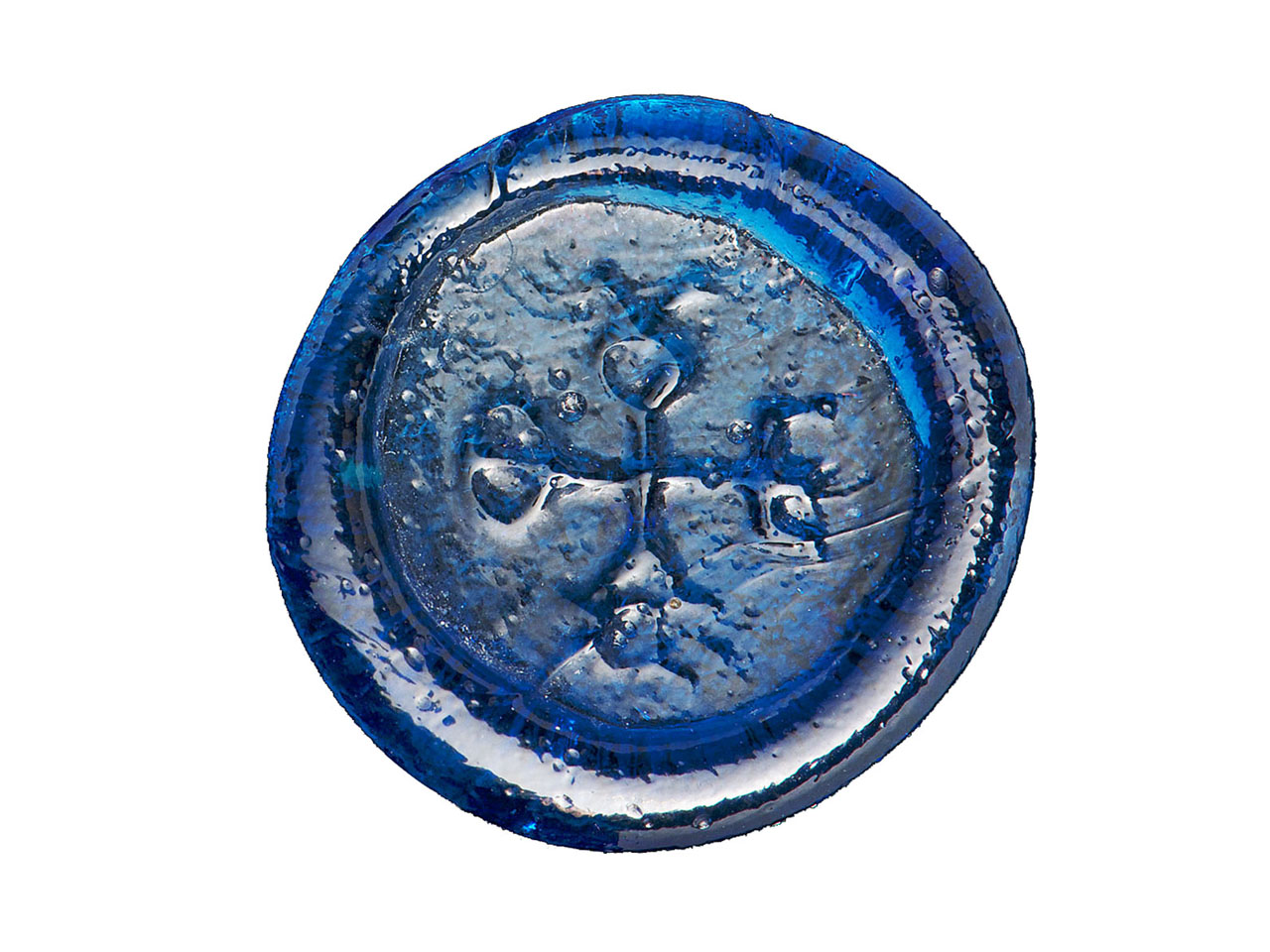
Glass Tremissis weight of the Byzantine Empire from circa AD 522-23 issued by Theodotos (NCC2014.24.1)
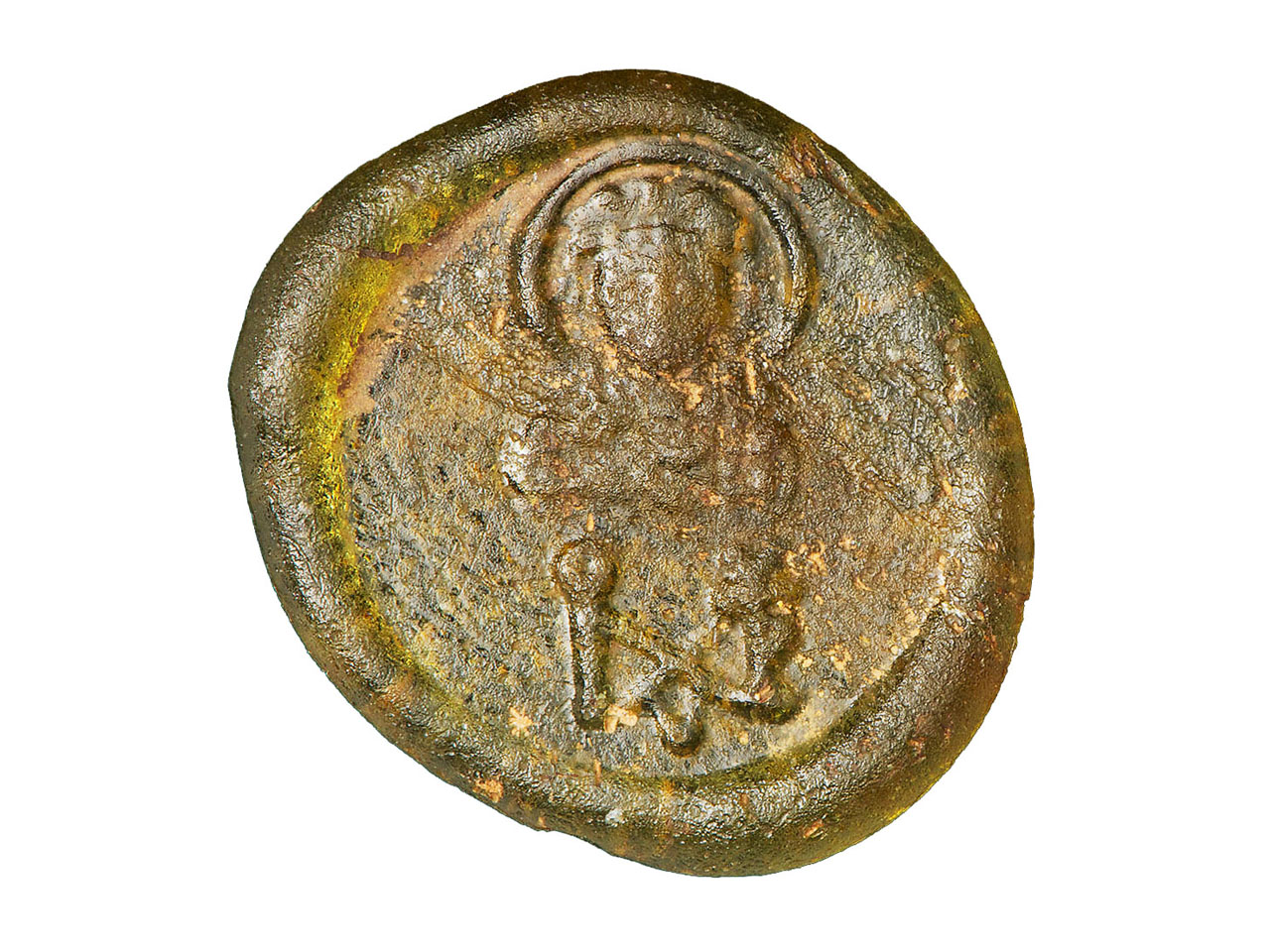
Glass Semis weight of the Byzantine Empire from circa AD 582-602 issued by Martinos (NCC2014.24.2)
Glass Solidus weight of the Byzantine Empire from circa 6th century AD issued by Droserios. (NCC2014.33.1)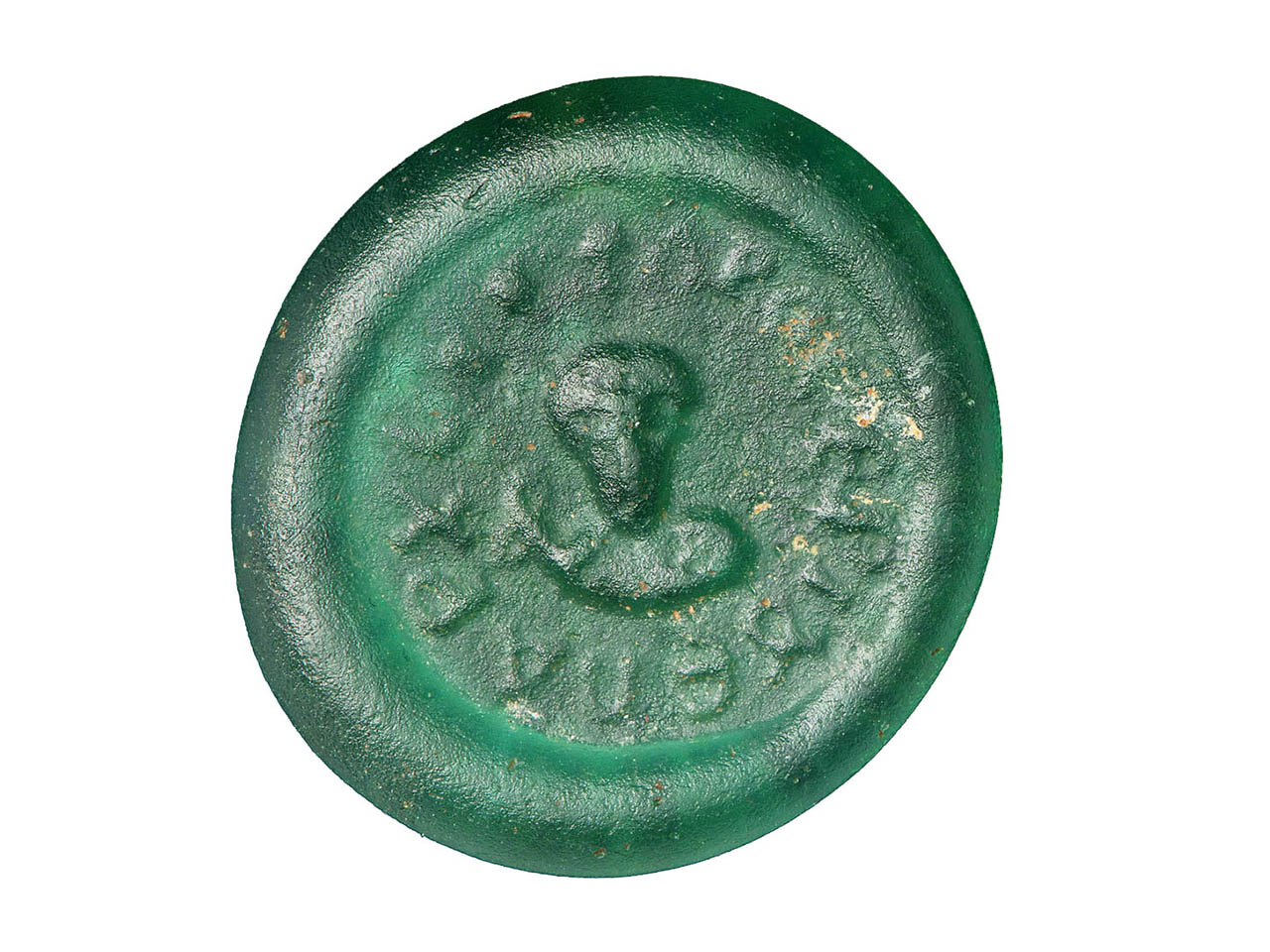
Some of these weights were made of glass. A blob of melted glass was dropped on a flat surface and stamped before it cooled. The same glass was used to make jewellery and delicate perfume bottles, so the weights come in a variety of colours. They all bear the name or monogram in Greek of the individual who issued them.
We want to hear from you! Do you have an idea for a blog post you’d like to see?
Content type(s):
Blog posts
The Museum Blog
September 22, 2026

The Money of Bytown
By: David Bergeron
Bytown was a frontier town built on the construction of the Rideau Canal and a booming lumber industry. Access to different forms of money and banking facilities provided the liquidity necessary for the town to prosper into Canada’s capital.
Content type(s):
Blog posts
September 18, 2026

Teaching with the Vertical $20
Engage students with creative activities linking the new bank note to careers, civics, history, social studies and art.
Content type(s):
Blog posts
Subject(s):
Arts,
Careers,
Financial literacy,
History,
Indigenous studies
Grade level(s):
Grade 04,
Grade 05,
Grade 06,
Grade 07 / Secondary 1,
Grade 08 / Secondary 2,
Grade 09 / Secondary 3,
Grade 10 / Secondary 4
July 20, 2026

A summer road trip of Canadian tokens
By: Graham Iddon
We took a virtual road trip through nearly every Canadian province and territory via trade and souvenir tokens.
Content type(s):
Blog posts
June 22, 2026

Reminiscences of the 1976 Montréal Olympic Coin Program
By: David Bergeron
The Olympic Coin Program was novel, ambitious, record-breaking and for some, life-changing—much like the Olympic Games that the program helped finance.
Content type(s):
Blog posts
May 26, 2026

The changing face of women on bank notes
By: Krista Broeckx
From queens to changemakers, discover how real women are finding their place on bank notes around the world.
Content type(s):
Blog posts
February 10, 2026

Love tokens: Change of heart
By: Graham Iddon
For centuries, people have been adding alternative messages to coins as political protests, advertising, commemoration and—most charmingly—love and affection. Such things are called love tokens.
Content type(s):
Blog posts
Subject(s):
Arts,
History
January 20, 2026

Three 50-cent pieces: The big changes to our small change
By: Graham Iddon
The maple leaves, beavers, schooners and caribous appear unchanged every year on our regular issued coins. But the 50-cent piece is a different story, because every time our coat of arms has changed, so has the coin.
Content type(s):
Blog posts
December 22, 2025

New acquisitions—2025 edition
From rare toonies to Métis scrip art, the Bank of Canada Museum’s 2025 acquisitions show how money and the economy shape Canadian lives.
Content type(s):
Blog posts
August 21, 2025

Whatever happened to the penny? A history of our one-cent coin.
By: Graham Iddon
The idea of the penny as the basic denomination of an entire currency system has been with Canadians for as long as there has been a Canada. But the one-cent piece itself has been gone since 2012.
Content type(s):
Blog posts
Subject(s):
History